Key facts
- Organisation
- APAC hospitality group
- Threat
- Cloud email account hijack and mass phishing blast
- Initial access
- Application configuration file exposed by a production debug page
- Impact
- Almost 10,000 phishing emails sent from a verified company address; outbound email down for more than a day; lasting damage to sender reputation
- Core issue
- Debug mode left on in production, and an email credential unrotated for over a year and a half
What this case shows
- A single misconfiguration can hand over every secret an application holds, with no malware and no break-in.
- Attackers do not always want your data. Sometimes they want your reputation, to lend credibility to attacks on someone else.
- Credentials that never rotate become permanent liabilities; the theft here predated the abuse by weeks at least.
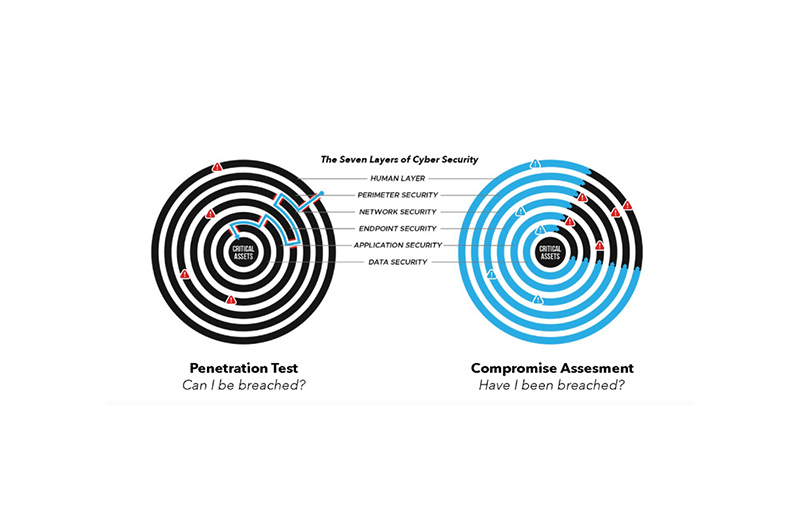
Find out what an attacker could already hold with a Compromise Assessment, or put expert responders on standby with Blackpanda IR-1.
What this would have cost without Blackpanda IR-1 in place
| ODIR | IR-1 | |
|---|---|---|
| Type of engagement | On-demand incident response | Yearly subscription |
| Hours covered | 38 hours | Unlimited* |
| Pricing1 | USD $19,000 | USD $1,900 |
* Unlimited for one incident per year
1 Ad-hoc incident response pricing based on average market rates, from USD 500 per hour. Blackpanda IR-1 subscription pricing based on no. of endpoints, costing approx. 10x less than ad-hoc and retainer-based incident response. All figures are illustrative only, for guidance and marketing purposes and not to be relied upon by the reader. Actual incident response costs vary by scope, complexity, and provider.
CHALLENGE
The organisation, an APAC hospitality group, ran a guest and staff portal on a public-facing web application. The application had been deployed with debug mode switched on, a setting meant for developers and never for production. Whenever the application hit an unhandled error, it responded with a large diagnostic page. Buried in that page was the application’s entire configuration file, including the credentials for the company’s cloud email service, its cloud access keys, and its database password.
Automated scanners found the flaw long before any human did. Over the weeks captured in the available logs, nearly 100 distinct sources retrieved the configuration file, some through crude mass scanning, one through a surgical two-request extraction that took seconds. The organisation had no visibility into any of it. The stolen email credential had gone unrotated for over a year and a half.
One morning in March 2026, the theft turned into abuse. An attacker authenticated to the cloud email service with the stolen credential and sent almost 10,000 phishing emails from one of the company’s verified addresses, peaking at around 90 messages a minute. The volume tripped the provider’s abuse controls, which suspended the account. The firm only realised something was wrong when its outbound email stopped working, an outage that lasted more than a day.

SOLUTION
1. Trace the theft to its source
Blackpanda reconstructed the exposure from web server logs, isolating the extraction most likely to have supplied the credentials used in the blast: two precise requests, about six hours before the first phishing email left. The team established that the configuration file had been harvested continuously for weeks, by so many separate parties that every secret it contained had to be treated as public.
2. Confirm the attacker never got inside
A full forensic triage of the web server and employee devices followed. The team found no web shell, no rogue accounts, no persistence, and no tampering anywhere. The attacker had never needed to log in; the stolen credentials were abused entirely from outside infrastructure, which narrowed containment to credential rotation rather than a network-wide rebuild.
3. Dissect the phishing campaign
Analysis of recovered samples showed a credential-harvesting lure aimed at business mailboxes in another country, written in their language, with each email personalised automatically to display the recipient’s own organisation name. The landing page pre-filled the victim’s email address, a hallmark of adversary-in-the-middle phishing kits that steal login sessions as well as passwords. The organisation was the delivery vehicle, not the target; the attacker wanted its clean sending reputation.
4. Map the full exposure, then close it
The investigation widened beyond the incident itself and surfaced three unrelated risks: more than 100 employee credentials leaked across around 40 mailboxes, company source code sitting in a public repository under a personal account, and a second cloud access key stored in plaintext on the same exposed server. Blackpanda delivered a prioritised remediation plan, from rotating every exposed secret to enforcing debug-mode-off through deployment automation.
RESULTS
1. Root cause closed for good
Debug mode was disabled in production and the fix wired into deployment controls, ending an exposure that had outlasted the organisation’s log retention.
2. Compromise confined
Forensics confirmed the damage stopped at the stolen credentials. No server, endpoint, or account inside the company showed any sign of intrusion.
3. Hidden exposures surfaced
Credentials observed on dark-web sources, two devices flagged for possible infostealer infection, and a public code repository were all identified and queued for remediation before any of them became the next incident.
4. Email restored, reputation repair underway
Sending resumed after the provider’s review, and the organisation left the engagement with a concrete plan to rebuild trust in its sender identity.
Every finding here traces upstream to controls that cost little: rotating credentials on a schedule, keeping developer settings out of production, and watching for company secrets in places they should never appear. Organisations that verify these basics before an incident rarely meet one this expensive.
FREQUENTLY ASKED QUESTIONS
1. How did the attackers steal the credentials without breaking in?
They never touched the company’s systems in any conventional sense. The application’s own error pages handed over the configuration file to anyone who triggered a fault, so the theft looked identical to ordinary web traffic. That is why no security alarm fired.
2. Why would attackers hijack a company’s email instead of stealing its data?
A verified corporate email address carries a clean reputation that spam filters trust. The attackers borrowed that trust to deliver phishing emails to victims elsewhere, in the same way stolen cloud access keys get abused to mine cryptocurrency at someone else’s expense. The company’s asset was its credibility, and that is what got stolen.
3. What is debug mode, and why is it dangerous in production?
Debug mode makes an application explain its own failures in detail so developers can fix them. In production, that same detail becomes a gift to attackers, because the explanations can include passwords, keys, and internal configuration. Turning it off is a one-line change; enforcing that through deployment automation is what keeps it off.
4. How long had the company been exposed?
Longer than its logs could prove. The earliest available records already show the configuration file being harvested, so the true exposure window predates them. One stolen credential had not been rotated in over a year and a half, which meant anyone who had ever taken the file could still use it.
5. What should an organisation do in the first hours of an incident like this?
Rotate every credential the exposed system could have leaked, not just the one confirmed stolen. Preserve logs and a forensic image before remediation overwrites the evidence. Then, bring in responders who can establish scope quickly, because the difference between a contained credential theft and a full network compromise dictates everything that follows. Blackpanda’s emergency incident response team handles exactly this triage.
WHAT THIS MEANS FOR YOUR ORGANISATION
The entry point here was not a person who clicked something. It was a system left explaining itself to strangers. That pattern now dominates the broader landscape: Verizon’s 2026 Data Breach Investigations Report found software vulnerabilities have overtaken stolen passwords as the leading way in, starting 31% of breaches. Attackers scan the entire internet continuously, so a misconfiguration on a public system is found in days and exploited at leisure. The question is not whether someone will notice; it is whether you notice first.
Two takeaways travel well beyond this case. Rotate credentials on a schedule, because a secret that never changes gives every past leak a permanent future. And treat your production configuration as attack surface, verified by automation rather than memory. For organisations that want a response team already retained when the morning goes wrong, Blackpanda IR-1 puts specialists on standby for a fraction of the cost of an ad-hoc engagement.
ABOUT BLACKPANDA
Blackpanda is a Lloyd’s of London–accredited insurance coverholder and Asia’s leading local cyber incident response firm, delivering end-to-end digital emergency support across the region. We are pioneering the A2I (Assurance-to-Insurance) model in cybersecurity — uniting preparation, response, and insurance into a seamless pathway that minimises financial and operational impact from cyber attack. Through expert consulting services, response assurance subscriptions, and innovative cyber insurance, we help organisations get ready, respond, and recover from cyber attacks — all delivered by local specialists working in concert.
Our mission is clear: to bring complete cyber peace of mind to every organisation in Asia, from the first moment of breach through full recovery and beyond.