Key facts
- Organisation
- Singapore technology firm
- Threat
- Dire Wolf ransomware, with data exfiltration and leak-site extortion
- Initial access
- CVE-2026-73570, an unauthenticated command-injection vulnerability in internet-facing mail servers, triggered by a rejected email
- Impact
- Ten servers encrypted, including production databases and backups; data transferred out; organisation named on a leak site
- Core issue
- A discontinued, unpatchable mail-server edition, a privilege misconfiguration and unrestricted outbound firewall rules
What this case shows
- An internet-facing server running a discontinued software edition stays exposed long after the vendor has published a fix.
- A web shell with limited privileges becomes full control of a server when local privilege rules are too broad.
- Firewall rules that let servers reach any internet address give stolen data a direct route out.
- Encrypting databases and then backups within the same hour leaves no time to protect the recovery path.
If an internet-facing system of yours can no longer be patched, talk to our emergency incident response team or start with incident response preparation.
What this would have cost with Blackpanda IR-1 in place
| ODIR | IR-1 | |
|---|---|---|
| Type of engagement | On-demand incident response | Yearly subscription |
| Hours covered | 110 hours | Unlimited* |
| Pricing1 | USD $55,000 | USD $5,500 |
* Unlimited for one incident per year
1 Ad-hoc incident response pricing based on average market rates, from USD 500 per hour. Blackpanda IR-1 subscription pricing based on no. of endpoints, costing approx. 10x less than ad-hoc and retainer-based incident response. All figures are illustrative only, for guidance and marketing purposes and not to be relied upon by the reader. Actual incident response costs vary by scope, complexity, and provider.
CHALLENGE
The organisation, a Singapore technology firm, operated two internet-facing mail servers that accepted connections from any address on the internet, with no inbound restriction in front of them. Both ran a discontinued edition of their mail software, for which no corrected version addressing CVE-2026-73570, an unauthenticated operating system command-injection vulnerability, has been identified. Internally, firewall rules permitted servers to reach any internet address on any service.
In July 2026, web shells, small programs that let an outsider run commands on a server, were found on both mail servers and removed the same day; however, the underlying vulnerability remained. Later that month, both servers were entered again, within minutes of each other, without a password or any action by staff, since a mail message that the server rejected was sufficient to deliver a new web shell. Within an hour, a second and separate weakness in the organisation's own privilege configuration had converted that limited access into full administrative control of both servers.
From that position, the mail platform's stored password file, holding more than 10 passwords in readable text, was retrieved a dozen times, and the full list of mail accounts was enumerated. The directory service holding every account in the organisation, a development server, several database servers and several backup servers were also reached, although how the credentials for those systems were obtained is not established. Over the following day, data was transferred from two database servers to an outside address.
Days later, ten servers were encrypted within an hour, production databases first and backup servers second. On one backup server, nearly all of the stored backup set was destroyed, including finance and payroll backups dating to 2024. The organisation was subsequently named on the Dire Wolf ransomware group's public leak site, and engaged Blackpanda in August 2026.

SOLUTION
1. Examined both mail servers from complete forensic disk copies
Blackpanda analysed both mail servers from complete forensic disk copies and examined triage collections from more than a dozen further servers. The payload recorded in the mail transport log was decoded and compared with the web shell recovered from disk, and the privilege records on both servers were examined to trace the escalation.
2. Reviewed firewall traffic and remote-access records to trace what left the network
Dozens of daily firewall traffic logs and millions of remote-access events were searched for the threat actor's infrastructure. This analysis isolated the outbound transfers and ruled out remote access as either the entry route or an exfiltration path, although firewall records for the mail servers did not cover the intrusion period.
3. Tested whether containment was complete
Blackpanda reviewed the running configuration of several firewalls and found containment correct but incomplete, with threat-actor addresses still reachable from parts of the network and unrestricted outbound rules still active, and issued corrective action items accordingly.
4. Monitored the threat actor's leak site
Blackpanda monitored the threat actor's leak site and negotiation infrastructure for two weeks, recording each listing of the organisation and the material posted as proof.
RESULTS
1. Proved the entry route with forensic certainty
The decoded payload and the web shell on disk were identical, proving that the rejected email, rather than some unobserved access, delivered the foothold, and that the escalation came from the organisation's own privilege configuration rather than the mail software.
2. Confirmed two data transfers as threat-actor activity
Firewall records showed two transfers, together close to 1 GB, and a recovered script on one server exports customer, banking and customer-relationship records to the same address; the organisation confirmed that neither the script nor the address is its own. What each transfer carried is not recorded.
3. Identified access that would survive a password reset
A threat-actor access key and a privilege-retaining binary on the mail servers, together with a stolen machine identity presented to the directory service, were identified for removal, since rotating user passwords revokes none of them. Whether the tickets issued to that machine identity were used is not established.
4. Delivered a defined list of corrective actions
Short-term actions covered credential rotation, removal of every recovered web shell, binary and key, outbound blocking of threat-actor addresses, and keeping both mail servers off reachable networks until the vulnerability workaround is applied and verified.
Although the source of the database credentials remains unestablished, the chain that made this incident possible is clear, and every link in it can be broken in advance. Internet-facing systems running software that can no longer be patched should be replaced or removed from the network; privilege rules for service accounts should be constrained so that a web shell cannot become administrative control; outbound firewall rules should permit only the destinations each server needs; and backups should be held where the accounts that run production cannot reach them.
FREQUENTLY ASKED QUESTIONS
1. How can an email our server rejects still compromise it?
When a vulnerable component processes the details of an incoming message before rejecting it, a payload hidden in those details can execute even though the message is never delivered. CVE-2026-73570 is one such vulnerability, and CISA has added it to its Known Exploited Vulnerabilities catalog. Because no user opens or clicks anything, awareness training offers no protection; only patching, or removing the vulnerable component, does.
2. What should we do about systems running software that is no longer supported?
Software that has reached end of life receives no further security fixes, so any vulnerability discovered afterwards stays open permanently. For internet-facing systems, the safest course is to migrate to a supported release or take the system off the network. Where neither is immediately possible, restricting access to known addresses reduces the exposure in the meantime.
3. Can attackers keep access after we reset every password?
Yes. Access keys added to administrative accounts, binaries configured to grant administrative privileges and stolen machine identities all operate independently of user passwords, so eradication requires finding and removing each mechanism and re-keying any machine identity that may have been taken. A Singapore insurance firm lost every VPN password to a single stolen firewall backup.
4. Why do outbound firewall rules matter if inbound traffic is blocked?
Inbound rules decide who can reach your servers; outbound rules decide where your servers can send data. Rules that let servers reach any internet address on any service give an attacker a ready route for stolen data and for tunnels back to their own infrastructure. Restricting each server to the destinations it genuinely needs, and logging every outbound rule, closes that route.
5. What does it mean if our organisation appears on a ransomware leak site?
A listing means the threat actor claims to hold your data and is using publication as leverage, usually while negotiation remains open:
- Do not engage the threat actor directly: route any contact through responders and legal counsel.
- Assess notification obligations: regulators and affected individuals may need to be informed.
- Monitor the listing: a countdown or a full data dump signals escalation.
6. What should we do first if production databases and backups are encrypted?
Contain first, then recover:
- Isolate, do not power off: disconnect affected servers while preserving memory and disks for investigation.
- Block outbound traffic: stop further data from leaving while the scope is established.
- Preserve logs: export firewall, server and application logs before they are overwritten.
- Engage responders immediately: report an incident to Blackpanda so that containment begins while evidence is intact.
WHAT THIS MEANS FOR YOUR ORGANISATION
This incident shows how quickly a single unpatched, internet-facing system becomes an organisation-wide event: within days, a mail server gave way to the directory service, the production databases and the backups. Because the vulnerability required no credential and no user action, the only effective defences were those already in place beforehand, namely supported software, constrained privileges and restrictive outbound rules.
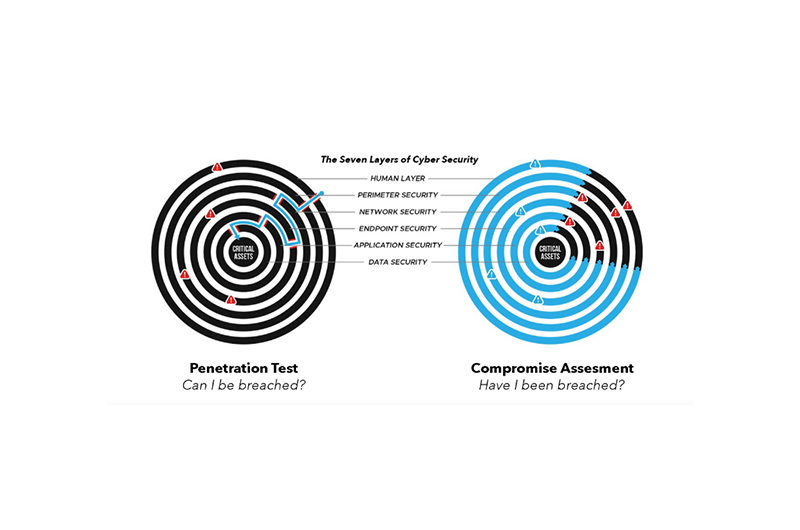
Organisations should identify every internet-facing system running software that can no longer be patched and either replace it or take it offline; a compromise assessment also establishes whether such a system has already served as a foothold. The investigation that follows an incident must begin while evidence still exists, which is what an IR-1 subscription secures for your organisation.
ABOUT BLACKPANDA
Blackpanda is Asia's leading cyber incident response company, delivering digital emergency response across three integrated channels: IR consulting, IR-1 assurance subscriptions, and Lloyd's of London-underwritten cyber insurance. Each is purpose-built for a different buyer, whether enterprise, mass market, or sophisticated risk-transfer clients, and each stands alone as full incident response. Together, these channels reach the entire commercial market, because our mission is to provide digital emergency response for everyone. Buy all three and they combine into the complete post-attack recovery solution: preparation in advance, response the moment you're hit, and financial recovery paid for by insurance. One local team to help you get ready, respond, and recover.